
Things to do in Faial: a local guide from Porto Pim
Faial is compact enough to explore from one base, but varied enough that each day can feel different. From Porto Pim, you can start with the beach and harbour, move into Horta for cafés and museums, drive inland to Caldeira, cross the island to Capelinhos, or use the ferry links for a longer island day.
This guide keeps the focus practical: how to shape a stay around the beach, harbour, volcanic landscapes, sea activities, museums, and ferry links.
Begin with Porto Pim beach and Horta harbour
Porto Pim beach is one of the easiest ways to settle into Faial. The bay is sheltered by the curve of Monte da Guia and has a calmer feeling than the active marina side of Horta. It works for a swim, a beach walk, or a low-effort first afternoon after arrival.
From the beach, continue toward the old Fábrica da Baleia, the Fort of São Sebastião, and the Military Doors of Porto Pim. The route gives a quick sense of how this part of Horta connects sea, defence, fishing, whaling history, and present-day neighbourhood life.
Horta harbour and marina are close enough to fold into the same day. The marina is famous for its painted harbour walls and sailing culture. Peter’s Café Sport and the Scrimshaw Museum are part of that maritime story, while the ferry terminal and boat operators make the harbour a practical departure point as well.
Plan one or two volcanic landscape days
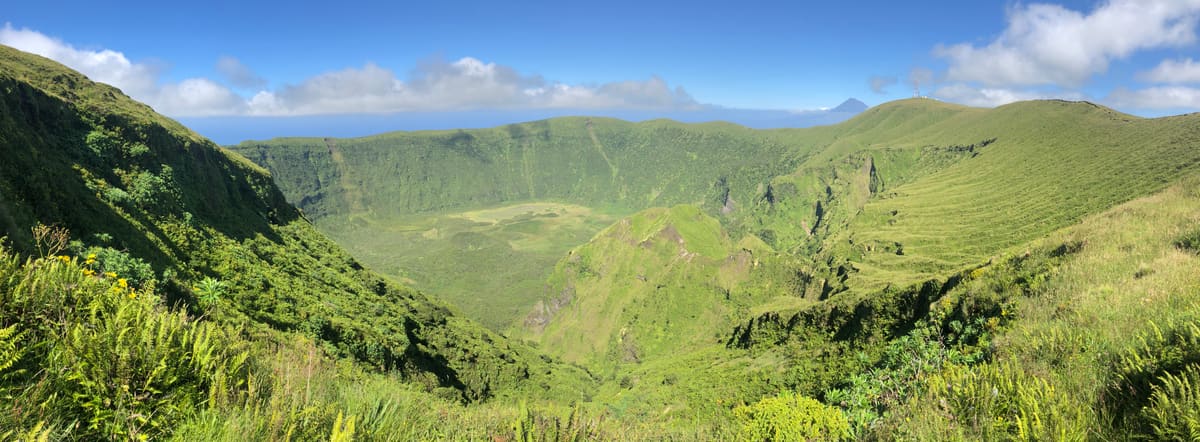
Caldeira do Faial is one of the island’s essential landscapes. The crater sits high in the centre of Faial, and the weather there can be very different from the coast. If the sky is clear, it is worth prioritising. Forest reserves near Caldeira and Capelo add quieter walking and picnic possibilities nearby.
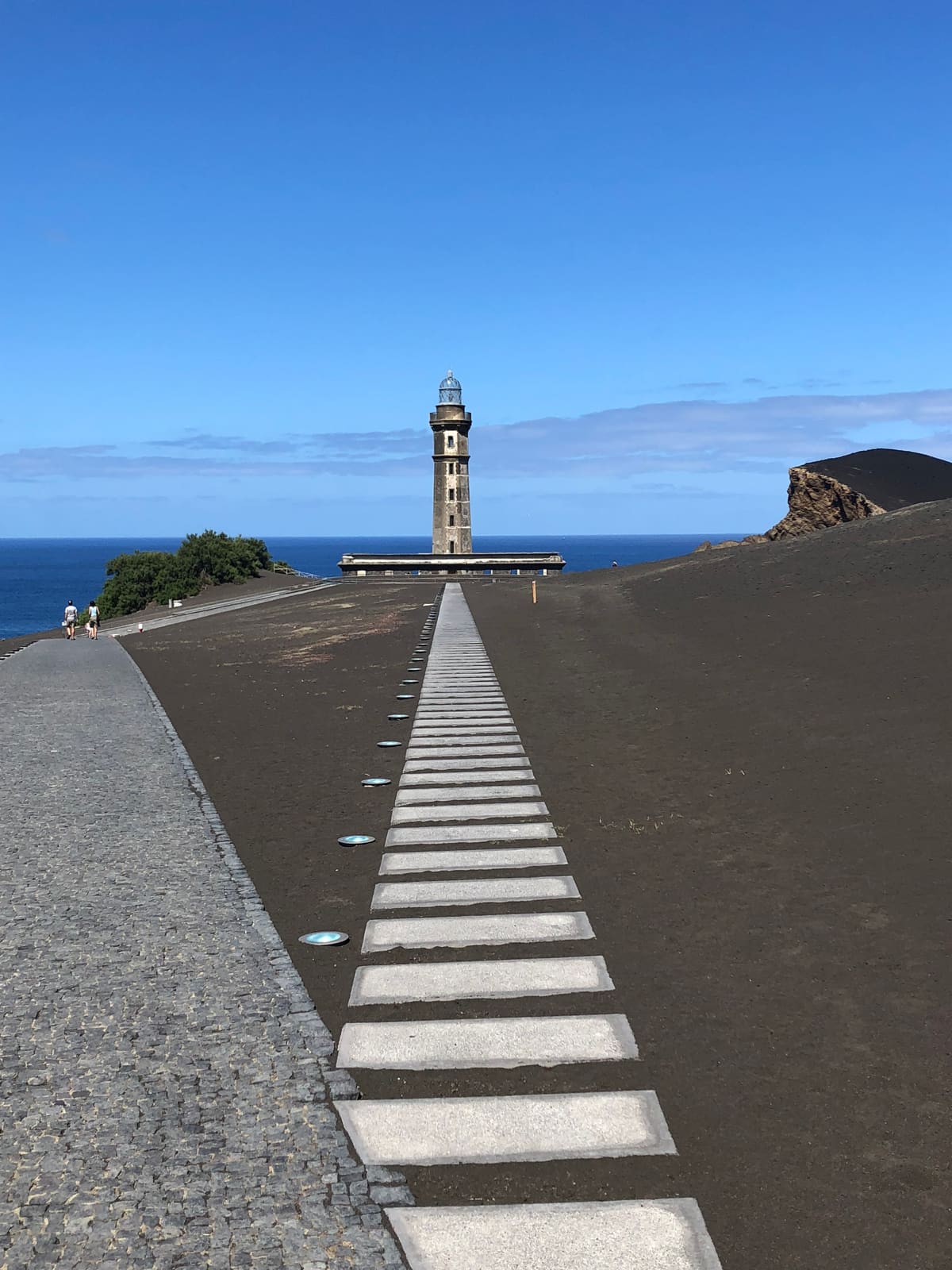
Capelinhos Volcano, on the western end of the island, shows a very different side of Faial. The volcanic landscape is stark, open, and recent in feeling compared with the greener interior. The Capelinhos Volcano Interpretation Centre helps explain what happened here and why the site is so important to the island’s modern history.
Other stops can shape the day depending on weather and time: Praia do Norte, Morro de Castelo, Porto do Comprido natural pools, and the western coastal roads all make sense when you are already on that side of the island.
Use the sea, not just the roads
Faial is deeply connected to the Atlantic. Whale watching is one of the most popular ways visitors experience that connection, with trips generally departing from the Horta area. Conditions, seasons, and operators matter, so plans should stay flexible.
Diving and apnea are also part of the local sea culture. Dive Azores is one known reference point in Horta, and experienced divers may already know the wider reputation of sites such as Princess Alice Bank. For most travellers, the first step is to speak with qualified local operators about conditions, suitability, and timing.
If you prefer simple swimming, Faial has several public options beyond Porto Pim: Praia do Almoxarife, Pedro Miguel coves, Porto da Boca da Ribeira, Praia da Fajã, Piscina Lajinha, and Porto do Comprido natural pools. Conditions vary, so local advice and common sense matter.
Make time for museums, history, and Horta streets
Horta is small, but it rewards slow walking. Around Porto Pim and Angústias parish, you can connect the beach, harbour, churches, forts, and old industrial buildings in a compact area. The Church of Nossa Senhora das Angústias and the Fort of Santa Cruz add more context to the city’s long relationship with ships and the sea.
Museums and interpretation spaces help on windier or cloudier days. Consider the Fábrica da Baleia museum, the Scrimshaw Museum, Manuel de Arriaga’s House, the Porto Pim Aquarium, Dabney’s House, and the Capelinhos Volcano Interpretation Centre. Horta walking tours can also be a good way to understand the city beyond the postcard view.
For guided island context, local tour operators such as Endemic and Our Island are useful references. As with sea activities, availability and routes depend on timing, weather, and each operator’s programme.
Eat and drink close to your base
A Porto Pim base keeps simple meals within reach. Café do Porto Pim and Taberna de Pim are close to the bay. Genuíno and Oceanic are also part of the local dining landscape around Horta and the waterfront. In town, Padaria Popular, Bar Príncipe, Restaurante Atlético, and Peter’s Café Sport give different ways to build a casual day around coffee, lunch, or dinner.
Rather than treating restaurants as a checklist, it is better to use them around the day’s route: beach first, harbour walk next, then dinner nearby, or a morning in Horta before driving toward Caldeira or Capelinhos.
Take a ferry day to Pico or São Jorge
Horta is one of the reasons Faial works well as a base. The Atlânticoline ferry network connects Faial with neighbouring islands, including Pico and São Jorge. A ferry day can add a completely different landscape to the trip, especially if your stay is long enough to avoid rushing Faial itself.
Check current ferry schedules directly before planning around them. Weather, season, and timetable changes can affect what is realistic on a given day.
Why Porto Pim is a useful starting point
Staying above Porto Pim gives you a practical daily pattern: water and Horta close by, roads out to the island within easy reach, and a calmer place to return to. Casa Tarapacana, on Rua da Rosa, is one example of that rhythm. The restored 1937 fisherman’s house sits above Porto Pim with views across Horta, the marina, beach, and harbour.
For details on the house, see the stay page. For wider context on the area, see the location page or return to the guide index.