
A guide to Porto Pim: beach, restaurants, history, and Horta harbour
Porto Pim is one of Horta’s most distinctive areas: a sheltered bay, a sandy beach, historic buildings, working harbour routes, and easy access to the city’s cafés and restaurants. It feels close to everything without feeling like the busiest part of town.
For travellers staying in or above the neighbourhood, Porto Pim can become the daily anchor: a morning swim, a walk into Horta, a museum visit, dinner near the water, then a quiet return uphill to the view.
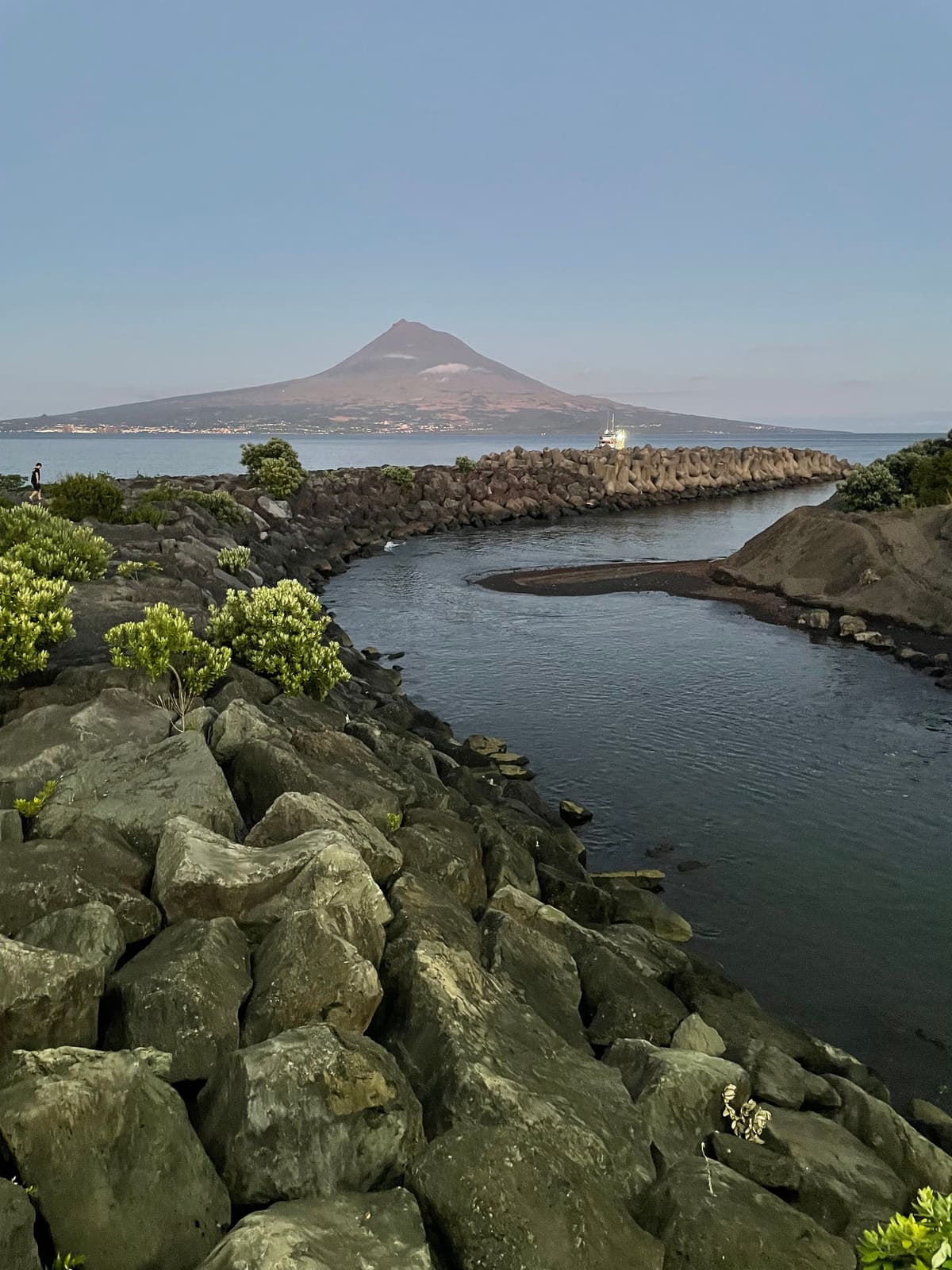
The bay and beach
Porto Pim beach is the natural starting point. The bay is protected by the surrounding landform and has a calmer atmosphere than the open Atlantic coast. It is one of the easiest places in Horta to touch the water without planning a full beach day.
The beach also gives useful orientation. Looking across the bay, you can read the relationship between Monte da Guia, the harbour, the old industrial buildings, and the edge of Horta. It is a compact place, but it carries a lot of the city’s maritime history.
History around Porto Pim
Porto Pim has long been connected to sea routes, defence, fishing, and later whaling. The Fort of São Sebastião and the Military Doors of Porto Pim point to the defensive role of the bay. The old Fábrica da Baleia connects the neighbourhood to the whaling era and to the way Faial’s economy changed over time.
The wider Angústias parish adds more layers. Churches, harbour routes, stone streets, and older houses all sit close together. This is why Porto Pim works best when explored slowly, not only photographed from the beach.
Restaurants, cafés, and simple local stops
Porto Pim and nearby Horta have enough public places to keep meals easy. Café do Porto Pim and Taberna de Pim are natural neighbourhood references close to the bay. Genuíno and Oceanic connect well with the waterfront side of a day. In Horta, Peter’s Café Sport remains one of the best-known names because of its sailing history, while Padaria Popular, Bar Príncipe, and Restaurante Atlético offer other casual options in town.
The best way to use the area is practical rather than rigid: coffee before a harbour walk, lunch after the beach, dinner after a drive to Caldeira or Capelinhos, or a relaxed drink after returning from a ferry day.
Walking from Porto Pim into Horta
One of Porto Pim’s strengths is walkability. You can move between the beach, harbour, marina, historic streets, restaurants, and museums without treating every outing as a drive. Horta’s scale makes this especially valuable if you prefer to mix planned activities with unplanned time.
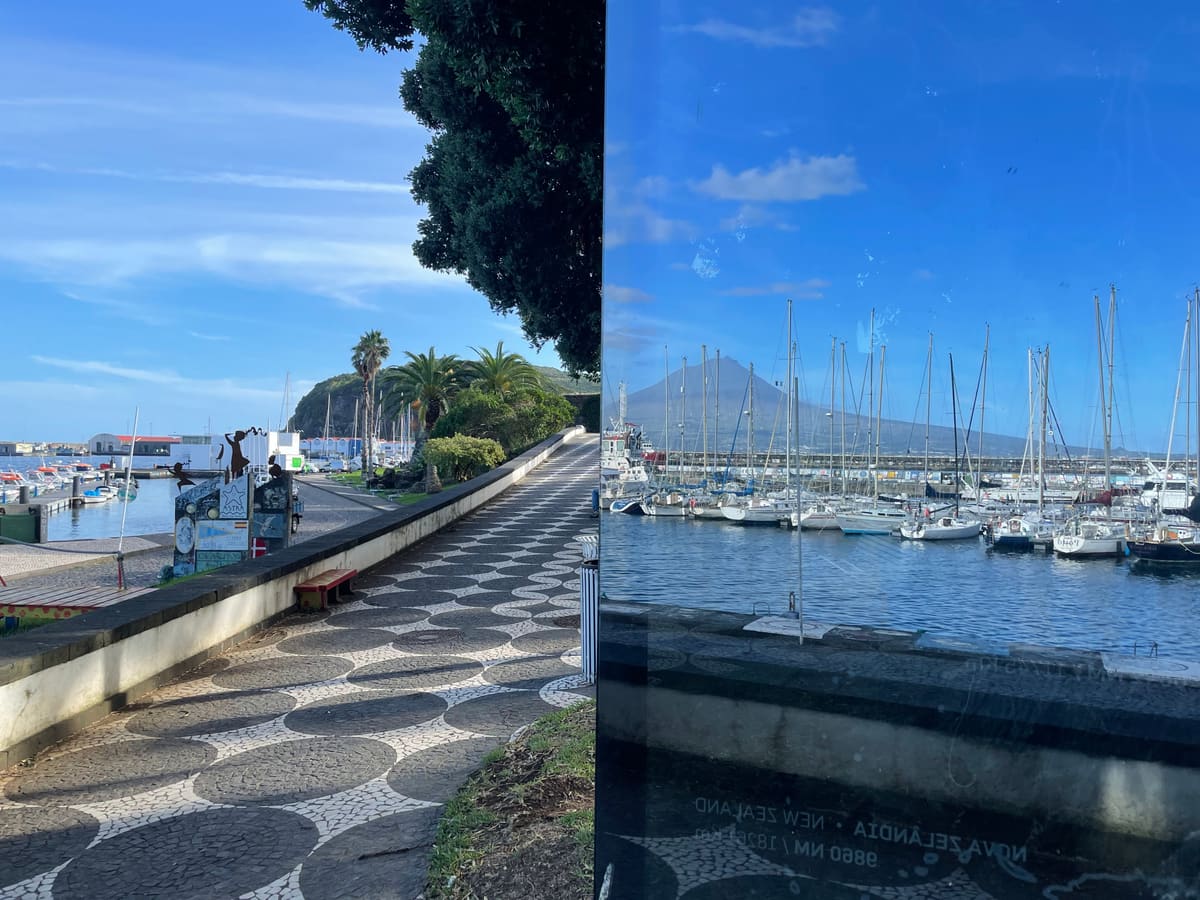
The harbour walk brings you toward the marina and its painted walls, Peter’s Café Sport, the Scrimshaw Museum, and the ferry area. Continuing through town opens up more cafés, shops, churches, and viewpoints. Fort of Santa Cruz is another public landmark that helps connect the city’s defensive and maritime history.
Museums and places to understand the area
Porto Pim is not only a beach neighbourhood. The Fábrica da Baleia museum, Porto Pim Aquarium, Dabney’s House, and the Scrimshaw Museum all help explain parts of Faial’s relationship with the Atlantic. Manuel de Arriaga’s House adds a different layer of local and national history.
For visitors who like context, these places make Porto Pim and Horta feel more specific. They also work well on days when the weather is mixed or when you want a slower morning before heading farther around the island.
Using Porto Pim as a base for Faial
From Porto Pim, the rest of Faial is straightforward to reach. Caldeira do Faial, Capelinhos Volcano, Praia do Norte, Espalamaca lookout, the Faial Botanical Garden, forest reserves near Caldeira and Capelo, and natural swimming spots can all fit into different day plans.
Sea activities also start naturally from Horta. Whale watching, scuba diving, apnea, and harbour-based excursions are part of the city’s public visitor rhythm. The ferry terminal connects Faial to Pico and São Jorge through Atlânticoline, which makes neighbouring islands possible when schedules and weather line up.
Why staying above Porto Pim works
The area is appealing at beach level, but staying above Porto Pim adds another dimension. Height brings wider views across the bay, Horta, the marina, the beach, and the harbour. It also gives a quieter end to the day while keeping the neighbourhood and city close.
Casa Tarapacana is a local example of that position. The restored 1937 fisherman’s house sits on Rua da Rosa above Porto Pim. It is arranged over two levels, sleeps four adults, and includes one full bathroom per level. The second level opens toward a garden terrace with a deck, BBQ structure, dining table, and views across the city, marina, beach, and harbour.
If you are deciding whether the location fits your trip, compare the house details on the stay page with the wider area notes on the location page. You can also return to the guide index for related Faial planning articles.
Who Porto Pim suits
- Travellers who want beach access and Horta access in the same stay.
- Guests who prefer a neighbourhood with history and local texture over a generic resort setting.
- Visitors planning a mix of walking, restaurants, museums, island drives, and sea activities.
- People who want calm evenings without being far from the harbour or city centre.